
      Main Menu
      SCIENCE Shop Explore
      0

      the science of breathing

      part one · sleep, snoring & overnight recovery

      most recovery problems are airway problems. airway problems.

      An open nose changes the night — fewer wake-ups, quieter sleep, and a nervous system that tips toward rest. Here is what the published research actually shows.

      Your nose is not a backup airway. It is the one your body is built around - filtering, warming, and pacing every breath, and quietly steering your heart rate and your sleep while you do nothing at all. When the nose is blocked or narrow, the work shifts to the mouth, and the night pays for it.

      The studies below were not run on a product. They were run on nasal breathing - what happens to sleep, snoring, blood pressure, and heart-rate variability when air moves through the nose instead of the mouth. Breathewave's only job is to make that easier by keeping the nasal airway open.

      37% fewer wake-ups when nasal resistance drops

      In a 28-night study of 70 adults, the rate of spontaneous overnight arousals fell roughly 37% from baseline when nasal resistance was reduced. Fewer arousals means the night holds together, leaving more uninterrupted time in the stages that actually restore you. Easier nasal breathing is what lowers that resistance.

      PMID 31119695Wheatley et al., Adv Ther 2019See the study
      Nasal resistance cut 39% with a dilator

      In the same research, measured nasal resistance dropped from 2.20 to 1.34 cmH₂O/L/s with an internal dilator versus without — about 39% lower (P=0.048). Lower resistance means less work to move air through the nose. The easier nasal breathing is, the more likely you are to keep doing it all night long.

      PMID 31119695Wheatley et al., Adv Ther 2019See the study

      Better sleep quality across the board (P<0.0001)

      All four subjective sleep endpoints the study tracked improved versus baseline, at high statistical significance (P<0.0001). Participants didn't just sleep differently — they reported it felt better. The common thread was easier nasal breathing through a more open airway.

      PMID 31119695Wheatley et al., Adv Ther 2019See the study

      11 more minutes of sleep a night

      Median wake-after-sleep-onset — the time you spend awake after first drifting off — dropped by about 11 minutes when participants used a dilator. Eleven minutes a night compounds across a week. It's time reclaimed simply by keeping the nose open.

      PMID 31119695Wheatley et al., Adv Ther 2019See the study

      Less time awake, more recovery

      That same reduction in wake-after-sleep-onset means less fragmented sleep and more continuous time actually asleep. Recovery happens in the unbroken stretches, not the interrupted ones. Easier nasal breathing helped keep those stretches intact.

      PMID 31119695Wheatley et al., Adv Ther 2019See the study

      Lower nasal resistance, deeper sleep

      When nasal resistance fell from 2.20 to 1.34 cmH₂O/L/s, sleep continuity improved alongside it. The nose is only the path of least resistance when it's open. Reducing that resistance is exactly what an internal dilator is built to do.

      PMID 31119695Wheatley et al., Adv Ther 2019See the study

      Internal nasal dilators reduce snoring

      In 41 adults measured with a smartphone app, an internal nasal dilator produced a significant reduction in snoring time and an improved sleep-quality score. Snoring is often a sign the airway is fighting itself. Opening the nasal airway gives the air a smoother, quieter path.

      PMID 30334424Gelardi et al., 2018See the study

      An internal dilator can quiet the room

      The same study found snoring time dropped significantly with an internal dilator in place — a difference your partner usually notices first. It comes from easier airflow through an open nose. The dilator isn't acting on your sleep; it's clearing the way for the nose to do its job.

      PMID 30334424Gelardi et al., 2018See the study

      Fewer micro-arousals overnight

      Snoring is a symptom of a strained airway, and the strain shows up as brief arousals you never consciously remember. Research recorded roughly 37% fewer of these arousals when nasal resistance dropped. Fewer interruptions add up to sleep that genuinely feels more restful.

      PMID 31119695Wheatley et al., Adv Ther 2019See the study

      The real benefit of mouth tape is nasal breathing

      Mouth tape works by forcing you to breathe through your nose — and it's the nasal breathing, not the tape, that the sleep data credits. If your nose is congested or narrow, taping just traps the problem. Making the nasal airway open is what makes nasal breathing sustainable in the first place.

      PMID 31119695Wheatley et al., Adv Ther 2019See the study

      5 minutes of nasal breathing lifts HRV

      In 20 adults, just five minutes of nasal breathing produced higher high-frequency heart-rate variability than breathing through the mouth (P=0.04, d=0.50). HF-HRV is a window into your nervous system's recovery state. Higher numbers point toward the rest-and-recover side.

      PMID 37867476Watso et al., Am J Physiol 2023See the study

      4 mmHg lower diastolic — just from closing your mouth

      In the same study, median diastolic blood pressure measured 68 mmHg while breathing nasally versus 72 mmHg while breathing through the mouth. This is a measured difference between two breathing routes in healthy adults — not a treatment for blood pressure. It shows the route you breathe through registers in the body within minutes.

      PMID 37867476Watso et al., Am J Physiol 2023See the study

      Ease the load on your heart

      Lower diastolic pressure during nasal breathing means the heart meets slightly less resistance between beats. The research simply compared nose versus mouth in healthy people; it does not treat or prevent any condition. It's one more sign the nose is the body's default for a reason.

      PMID 37867476Watso et al., Am J Physiol 2023See the study

      Tip the stress-to-rest balance toward rest

      Nasal breathing lowered the LF/HF ratio — a marker of the balance between the body's stress and rest systems — compared with mouth breathing (P=0.04). A lower ratio leans toward rest. The shift came simply from changing how the air got in.

      PMID 37867476Watso et al., Am J Physiol 2023See the study

      the enabler, not the cure

      an open airway is the prerequisite.

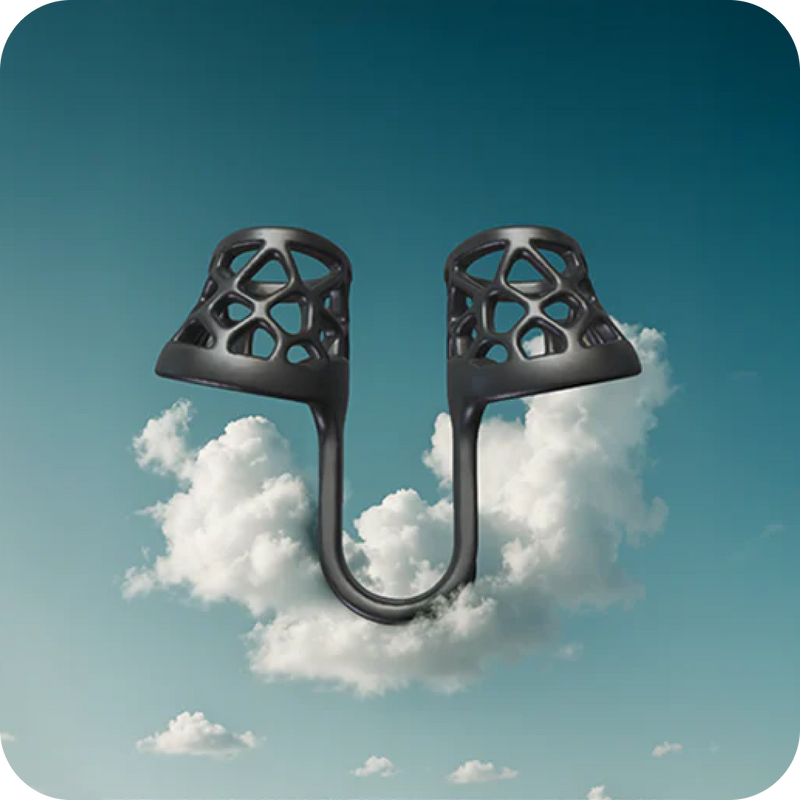
      Breathewave is a reusable, medical-grade internal nasal dilator that keeps your nasal airway open — so breathing through your nose is easier, night and day. It doesn't do the work. Your nose does. It just gets out of the way.

      Meet Breathewave
      2-story-block-square.png

      Your nose builds the HRV your wearable tracks

      The higher HF-HRV seen during nasal breathing is the very signal your ring or watch reports each morning. The number isn't random — it responds to how you breathe. Nasal breathing nudges it upward.

      PMID 37867476Watso et al., Am J Physiol 2023See the study

      Your recovery score responds to how you breathe

      HF-HRV rose measurably during nasal breathing (P=0.04, d=0.50), and that's a core input to the recovery scores wearables calculate. Breathe through your nose and you're feeding the metric you're trying to improve. The airway has to be open for it to feel effortless.

      PMID 37867476Watso et al., Am J Physiol 2023See the study

      Your nervous system was built for the nose

      Slow nasal breathing has been shown to raise heart-rate variability and parasympathetic — “rest” — activity. Two separate lines of research, a controlled comparison and a broad review, point the same direction. The body's calming machinery responds to nasal airflow.

      PMID 37867476Watso et al., Am J Physiol 2023See the study

      PMID 30245619Zaccaro et al., Front Hum Neurosci 2018See the study

      Calm is a breathing pattern

      A wide review of breathing research documented consistent autonomic, brain, and psychological effects from slow breathing. Calm isn't only a mood — it has a measurable physiological signature. Slow nasal breathing is one of the most direct ways to reach it.

      PMID 30245619Zaccaro et al., Front Hum Neurosci 2018See the study

      Shift toward recovery in 5 minutes

      A paired comparison found the shift toward rest within five minutes of nasal breathing, and a larger review confirms the pattern across many studies. You don't need a long practice to register the change. A few quiet minutes through the nose is enough to begin.

      PMID 37867476Watso et al., Am J Physiol 2023See the study

      PMID 30245619Zaccaro et al., Front Hum Neurosci 2018See the study

      Calm has a tempo: slow, nasal, even

      In the research, slow breathing raised HRV and increased reported comfort and relaxation. The tempo matters as much as the route — slow, even breaths through the nose. It's a pattern anyone can find without equipment.

      PMID 30245619Zaccaro et al., Front Hum Neurosci 2018See the study

      Slow nasal breathing eases anxiety, anger, and low mood

      A review linked slow breathing to reductions in anxiety, depression, anger, and confusion across studies. These are everyday emotional shifts, not clinical treatment for any disorder. A calmer breathing pattern reaches the systems that set your baseline mood.

      PMID 30245619Zaccaro et al., Front Hum Neurosci 2018See the study

      Mouth breathing isn't harmless background noise

      Chronic mouth breathing is associated with sleep-disordered breathing and daytime consequences in the literature. It's a habit with a cost, not a neutral alternative to the nose. The fix starts with making nasal breathing the easier choice.

      PMID 29479521Huang & Guilleminault, 2018See the study

      the studies behind this page

      1. 01 Wheatley JR, et al. Reduction of nasal resistance with an internal nasal dilator improves sleep. Advances in Therapy, 2019 · PMID 31119695PubMed
      2. 02 Gelardi M, et al. Internal nasal dilator and snoring: a smartphone-based assessment. 2018 · PMID 30334424PubMed
      3. 03 Watso JC, et al. Nasal versus oral breathing and cardiovascular and autonomic responses. American Journal of Physiology, 2023 · PMID 37867476PubMed
      4. 04 Zaccaro A, et al. How breath-control can change your life: a systematic review of slow breathing. Frontiers in Human Neuroscience, 2018 · PMID 30245619PubMed
      5. 05 Huang YS, Guilleminault C. Pediatric obstructive sleep apnea and the critical role of oral-facial growth. 2018 · PMID 29479521PubMed

      This page is educational. It describes published findings about nasal breathing and is not medical advice, diagnosis, or treatment. Breathewave keeps the nasal airway open to make nasal breathing easier; it does not treat any disease or condition. Talk to a clinician about your sleep or health.